

Introduction
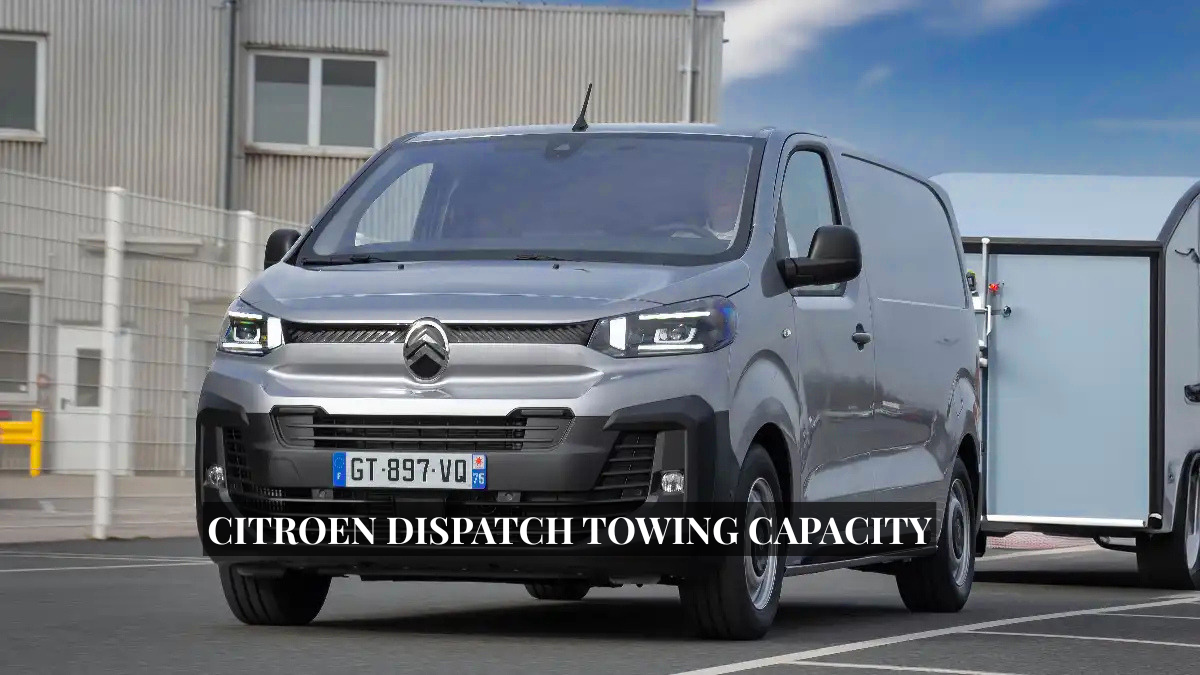
The citroën dispatch towing capacity is one of the most important reasons this van continues to be a top choice for small businesses, tradespeople, and even recreational drivers. The citroën dispatch towing capacity sits in a very practical range for a mid-size van, offering enough strength to pull trailers, small machinery, and caravans without stepping into the larger and more expensive heavy-duty van category.
What makes the citroën dispatch towing capacity especially useful is its balance between power and everyday usability. Many vans either focus on load carrying or towing, but the Dispatch manages to combine both in a compact, city-friendly body. This makes it ideal for people who need flexibility in their daily work routine.
Overview of the Citroën Dispatch
The Citroën Dispatch is a mid-size panel van designed for practicality and efficiency. It is widely used across Europe for logistics, trade work, and mobile service businesses. Over time, it has built a strong reputation because it delivers dependable performance without being too large or difficult to handle.
The citroën dispatch towing capacity plays a major role in its popularity. While many vans of similar size struggle with heavier loads, the Dispatch is engineered to handle both cargo and towing tasks effectively. It is available in diesel and electric versions, allowing users to choose based on their workload requirements.
What Towing Capacity Really Means
To understand the citroën dispatch towing capacity, it is important to first understand what towing capacity actually means. Towing capacity refers to the maximum weight a vehicle can safely pull behind it using a trailer. This includes braked trailers and unbraked trailers, which have different limits.
In the case of the Dispatch, the citroën dispatch towing capacity is set by the manufacturer based on engine strength, braking system, suspension, and overall vehicle stability. These limits are not just recommendations—they are safety rules that must be followed to avoid damage or legal issues.
| Feature | Details |
|---|---|
| Vehicle | Citroën Dispatch |
| Diesel towing capacity | Up to 2,500 kg |
| Electric towing capacity | Around 1,000 kg |
| Unbraked limit | 750 kg |
| Best engine for towing | 2.0L BlueHDi diesel |
| Main use | Work, delivery, light–medium towing |
Diesel Engine Towing Performance
The diesel versions are where the citroën dispatch towing capacity really shows its strength. Most diesel models offer a braked towing capacity between 2,000 kg and 2,500 kg, depending on engine size and configuration. The 2.0-litre BlueHDi engine is the strongest option and is commonly used by businesses that need frequent towing capability.
The citroën dispatch towing capacity in diesel models is especially useful for towing caravans, machinery trailers, and construction equipment. Drivers often prefer diesel because of its strong torque, which helps when starting on hills or pulling heavy loads over long distances.
The 1.5-litre diesel engine also supports solid towing performance, although it is slightly lower in capacity. Still, for many users, it provides a good balance between fuel economy and practical towing ability.
Electric Version Towing Capacity
The electric version, known as the ë-Dispatch, has a reduced citroën dispatch towing capacity compared to diesel models. It is typically rated at around 1,000 kg for braked trailers. While this is sufficient for light towing tasks, it is not designed for heavy-duty hauling.
The lower citroën dispatch towing capacity in the electric model is mainly due to the weight of the battery system and its focus on urban driving efficiency. It is ideal for city deliveries and short-distance work where towing demands are minimal.
Braked and Unbraked Limits
A key part of understanding the citroën dispatch towing capacity is knowing the difference between braked and unbraked trailers. Braked trailers have their own braking system, allowing the vehicle to tow heavier loads safely. This is where the Dispatch reaches its maximum towing potential of up to 2,500 kg in diesel variants.
Unbraked trailers, on the other hand, rely completely on the van’s braking system. Because of this, the citroën dispatch towing capacity for unbraked trailers is limited to around 750 kg across all versions. This is a legal and safety restriction that applies to most vehicles in this category.
Payload and Towing Balance
One often overlooked factor is the relationship between payload and towing capacity. The citroën dispatch towing capacity does not exist independently from the vehicle’s internal load limit. If the van is already carrying heavy tools or materials inside, the towing ability may be reduced.
This balance is crucial in real-world use. Many businesses rely on both internal cargo space and towing capability at the same time. Understanding how the citroën dispatch towing capacity interacts with payload limits helps prevent overloading and ensures safe driving conditions.
Real Driving Experience
In real-world conditions, the citroën dispatch towing capacity performs reliably when used correctly. Drivers often report that the van feels stable even when towing medium-sized trailers, especially in diesel versions. The suspension system and chassis design help maintain balance during highway driving.
However, like any mid-size van, the citroën dispatch towing capacity is best used within safe limits rather than constantly pushing maximum weight. Fuel consumption increases when towing heavy loads, and acceleration becomes slower, but overall control remains strong and predictable.
Safety Factors While Towing
Safety is a major part of using the citroën dispatch towing capacity correctly. Proper loading of trailers is essential because uneven weight distribution can cause instability. Regular checks on tyres, brakes, and towing connections are also necessary before every journey.
When using the full citroën dispatch towing capacity, drivers should avoid sudden braking or aggressive acceleration. Smooth driving helps maintain control and reduces wear on both the van and trailer.
Comparison with Other Vans
When compared to competitors like the Ford Transit Custom and Volkswagen Transporter, the citroën dispatch towing capacity remains very competitive. Diesel versions of all these vans generally offer similar towing ranges of up to 2,500 kg.
This makes the Dispatch a strong option in the mid-size van segment. The citroën dispatch towing capacity is not necessarily higher than rivals, but it is consistent, reliable, and backed by a well-balanced driving experience.
Choosing the Right Model
If towing is a regular requirement, the 2.0-litre diesel version is the best choice for maximizing the citroën dispatch towing capacity. It offers the highest torque and the strongest pulling ability, making it ideal for heavy-duty tasks.
For lighter work, the 1.5-litre diesel is more economical while still providing decent citroën dispatch towing capacity for everyday use. The electric version is best suited for users who rarely tow and focus more on city-based driving.
Common Uses in Daily Work
The citroën dispatch towing capacity is widely used in industries such as construction, maintenance, delivery services, and mobile repair businesses. Many users rely on it for towing small machinery, equipment trailers, and even caravans for personal use.
Because of its flexibility, the citroën dispatch towing capacity makes the Dispatch suitable for both professional and lifestyle purposes. This dual functionality is one of its biggest strengths.
Legal and Maintenance Considerations
It is essential to always follow legal towing limits when using the citroën dispatch towing capacity. These limits are clearly stated on the vehicle’s VIN plate and must never be exceeded. Overloading can lead to fines, insurance problems, and mechanical damage.
Regular maintenance also ensures that the citroën dispatch towing capacity remains safe and effective. Brake checks, tyre inspections, and tow hitch maintenance should be done frequently, especially if towing is part of daily use.
Conclusion
The citroën dispatch towing capacity makes this van one of the most practical and balanced options in the mid-size commercial vehicle segment. With diesel versions offering up to 2,500 kg and electric models suitable for lighter loads, it provides flexibility for a wide range of users.
Whether used for business or personal purposes, the citroën dispatch towing capacity delivers dependable performance when used correctly. Its combination of strength, efficiency, and real-world usability ensures that the Dispatch remains a trusted choice for drivers who need both carrying and towing capability in one vehicle.
FAQs
Q: What is the Citroën Dispatch towing capacity?
A: It can tow up to 2,500 kg in diesel versions and around 1,000 kg in electric models.
Q: Can the Citroën Dispatch tow a caravan?
A: Yes, diesel models can tow most medium-sized caravans safely within the towing limit.
Q: What is the unbraked towing limit?
A: The Citroën Dispatch can tow up to 750 kg without trailer brakes.
Q: Which engine has the best towing capacity?
A: The 2.0L BlueHDi diesel engine offers the highest towing performance.
Q: Is the Citroën Dispatch good for heavy towing?
A: Yes, but only diesel versions are suitable for regular heavy towing tasks.
