

Introduction
The modern automotive world is built on speed, precision, and continuous production flow. As vehicle demand increases globally, manufacturers are shifting from manual logistics to fully automated systems. One of the most important technologies supporting this transformation is the agv system automotive industry solution.
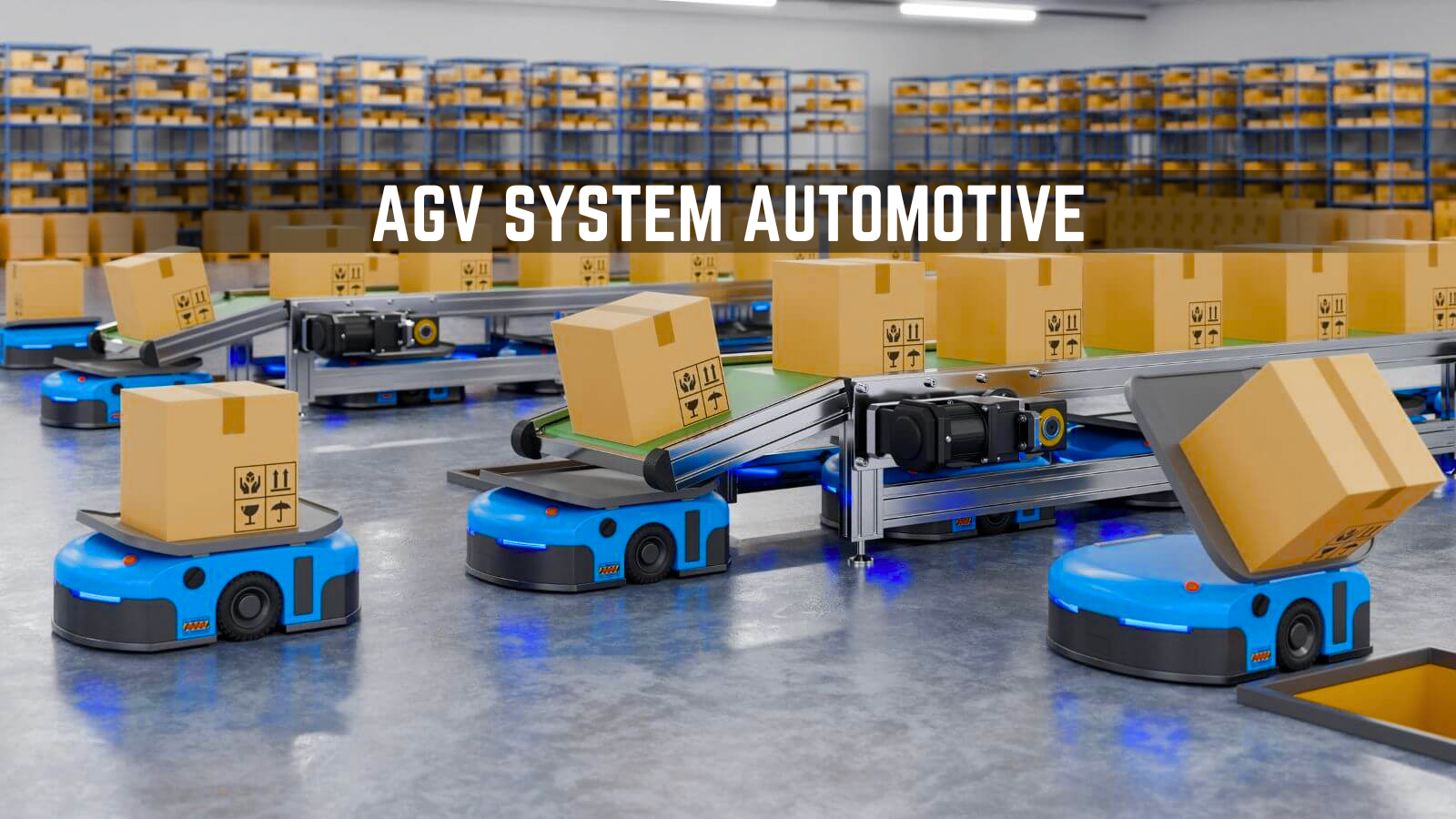
An AGV system automotive setup uses automated guided vehicles to transport materials, components, and assemblies inside manufacturing plants without human drivers. These systems are designed to improve efficiency, reduce operational delays, and support the complex structure of modern car production lines.
Unlike traditional forklifts or manual trolleys, AGVs are guided by sensors, software, and navigation systems that allow them to move safely in highly organized factory environments. Automotive companies such as Toyota Motor Corporation, BMW, and Tesla have widely adopted this technology as part of their smart manufacturing strategies.
This article explains everything about AGV systems in automotive production, including how they work, why they matter, and where they are heading in the future.
What AGV System Means in Automotive Plants
The term agv system automotive refers to a coordinated automation setup where multiple driverless vehicles operate under a central control system to manage internal factory logistics. These vehicles follow programmed routes or dynamic navigation paths to deliver parts exactly where they are needed.
In automotive manufacturing, production is divided into several stages such as stamping, welding, painting, assembly, and inspection. Each stage requires a continuous supply of components. The AGV system ensures that materials flow smoothly between these stages without interruption.
A typical AGV system includes:
- Automated vehicles
- Central control software
- Navigation infrastructure
- Sensors and safety systems
- Communication network
Each element works together to create a fully synchronized logistics environment.
The evolution of the agv system automotive concept has made factories more organized, reducing dependency on human-driven logistics and improving overall production reliability.
Core Technology Behind AGV Systems
The technology behind AGVs is a combination of robotics, artificial intelligence, and industrial automation. Each vehicle is equipped with sensors that allow it to detect obstacles, read navigation signals, and maintain safe movement inside the factory.
Modern AGVs use:
- Laser guidance systems
- Magnetic or optical tracking
- Camera-based vision systems
- LiDAR sensors for mapping
- Wireless communication modules
These technologies allow the agv system automotive structure to function in both predictable and semi-dynamic environments.
The central software plays a key role by assigning tasks, optimizing routes, and ensuring that multiple AGVs do not collide or block production flow. This coordination is essential in automotive factories where timing is critical and delays can disrupt entire production lines.
| Category | Details |
|---|---|
| Name | AGV System in Automotive |
| Full Form | Automated Guided Vehicle |
| Industry | Automotive Manufacturing |
| Purpose | Transport materials & parts inside factories |
| Technology | Sensors, AI, lasers, navigation systems |
| Key Users | Toyota, BMW, Tesla |
| Main Benefit | Faster, safer, and automated production |
| Future Scope | Smart factories with full automation |
How AGV Systems Operate
The working process of an agv system automotive facility follows a structured cycle that ensures continuous material movement.
First, the factory’s production management system assigns a transport task. This may involve moving engine parts, seats, or chassis components from one station to another.
Next, the AGV receives the instruction and calculates the most efficient route. It begins moving through the factory while continuously scanning its environment for obstacles or changes.
Once it reaches the pickup location, it loads the required materials using automated lifting mechanisms or manual assistance depending on system design. After loading, the AGV transports the goods to the destination station.
At the final point, the materials are unloaded, and the AGV either returns to a charging station or receives a new task.
This cycle continues throughout the day, making the agv system automotive workflow one of the most reliable logistics solutions in manufacturing.
Types of AGVs Used in Automotive Industry
Different types of AGVs are used depending on production requirements and load capacity.
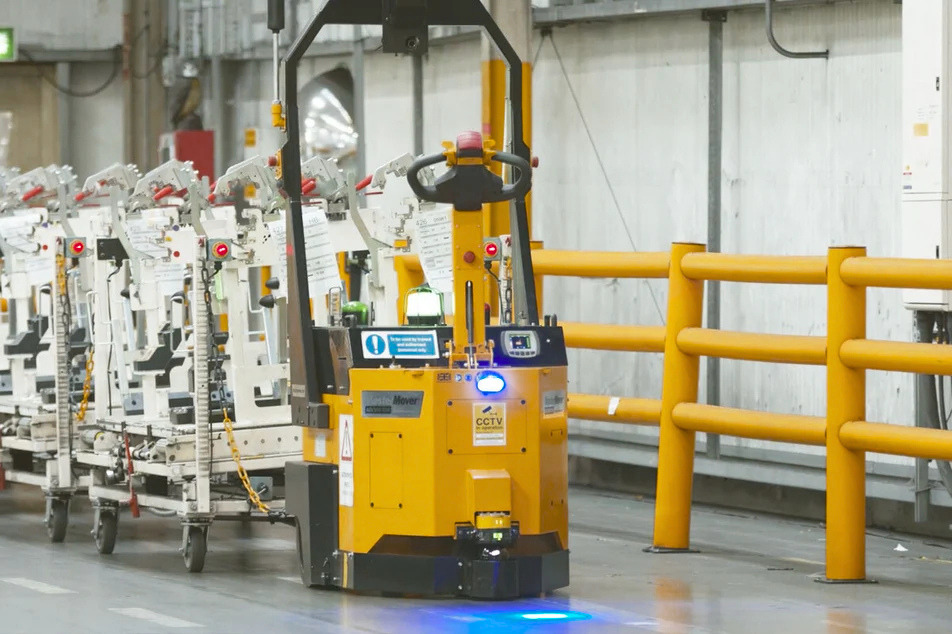
Tugger AGVs are commonly used to pull multiple carts filled with automotive parts across long distances within factories. These are ideal for large-scale material movement.
Forklift AGVs operate like traditional forklifts but without human drivers. They are used to lift and transport heavy components such as engines or pallets.
Unit load AGVs are designed for carrying single items like dashboards, seats, or electronic modules directly to assembly stations.
Heavy-duty AGVs are specialized machines used for transporting large vehicle structures or chassis frames.
Each of these types contributes to the efficiency of the agv system automotive environment by handling specific logistical tasks.
Applications in Automotive Manufacturing
The use of agv system automotive solutions is widespread across all major production areas in a vehicle manufacturing plant.
In welding shops, AGVs transport car bodies between robotic welding stations. This ensures consistent production flow without manual intervention.
In paint shops, AGVs carry vehicle bodies through controlled environments where coating and drying processes take place.
During assembly, AGVs deliver parts directly to workers at precise timings. This reduces downtime and ensures that production lines never run out of essential components.
In final assembly areas, AGVs are sometimes used to move completed vehicles to inspection zones or testing facilities.
The integration of AGVs into these processes ensures that every stage of manufacturing remains synchronized and efficient.
Benefits of AGV Systems
The agv system automotive model provides several important advantages that have transformed modern manufacturing.
One of the most significant benefits is increased productivity. Since AGVs operate continuously without breaks, they help maintain uninterrupted production flow.
Safety is another major advantage. By replacing manual forklifts, AGVs reduce workplace accidents and improve overall factory safety conditions.
Precision is also improved significantly. AGVs follow programmed instructions, ensuring that materials are delivered exactly where they are needed.
Cost efficiency plays a long-term role as well. While installation may require investment, operational savings in labor and reduced errors make AGVs highly cost-effective over time.
Flexibility is another important benefit. Factory layouts can be adjusted digitally, allowing the agv system automotive structure to adapt without major physical changes.
Integration with Smart Manufacturing
Modern automotive factories are moving toward fully digitalized environments. In this setup, AGVs are not standalone machines but part of a larger interconnected system.
Companies like Siemens and KUKA provide automation platforms that integrate AGVs with robotics, warehouse systems, and production software.
In these smart factories, AGVs communicate in real time with robotic arms and production lines. This allows factories to operate with minimal human intervention in logistics operations.
The agv system automotive approach is therefore a core pillar of Industry 4.0 manufacturing, where machines coordinate and optimize production autonomously.
Challenges in Implementation
Despite its advantages, the agv system automotive model also faces several challenges.
High installation cost is one of the major barriers. Setting up navigation systems, infrastructure, and software requires significant investment.
Maintenance is another factor. AGVs depend on sensors and electronic systems that must be regularly maintained to ensure accuracy and safety.
System complexity can also be challenging, especially when integrating AGVs into older factories that were not originally designed for automation.
Additionally, route flexibility can sometimes be limited compared to newer autonomous mobile robots, especially in rapidly changing production environments.
Future of AGV Systems in Automotive Industry
The future of the agv system automotive technology is closely linked to artificial intelligence, machine learning, and 5G connectivity.
Next-generation AGVs are expected to become more intelligent, capable of making real-time decisions based on factory conditions. They will also be able to predict maintenance needs and optimize routes automatically.
Digital twin technology will allow manufacturers to simulate AGV movement before implementing changes in real factories, reducing risk and improving efficiency.
In the coming years, AGVs will play a central role in fully autonomous automotive factories where logistics, production, and quality control are all digitally connected.
Conclusion
The agv system automotive industry solution has completely changed how vehicles are manufactured. By automating internal logistics, it has improved speed, safety, and precision across production environments.
From transporting parts to supporting final assembly, AGVs ensure that every stage of manufacturing operates smoothly and efficiently. As technology continues to evolve, these systems will become even more intelligent and deeply integrated into smart factories.
Ultimately, the agv system automotive approach represents the future of industrial logistics, where automation and data-driven decision-making define the next generation of automotive production.
FAQs
Q: What is an AGV system in automotive manufacturing?
A: It is a driverless transport system used in car factories to move parts and materials between production stations automatically.
Q: How does an AGV navigate inside factories?
A: AGVs use sensors, cameras, lasers, or magnetic tracks to follow safe and accurate routes.
Q: Why are AGVs used in car factories?
A: They improve speed, reduce labor costs, and ensure smooth material flow in production lines.
Q: Are AGV systems safe to use?
A: Yes, they have built-in safety sensors that help avoid collisions and detect obstacles.
Q: What is the future of AGVs in automotive industry?
A: They will become more intelligent with AI, enabling fully automated and connected smart factories.
