

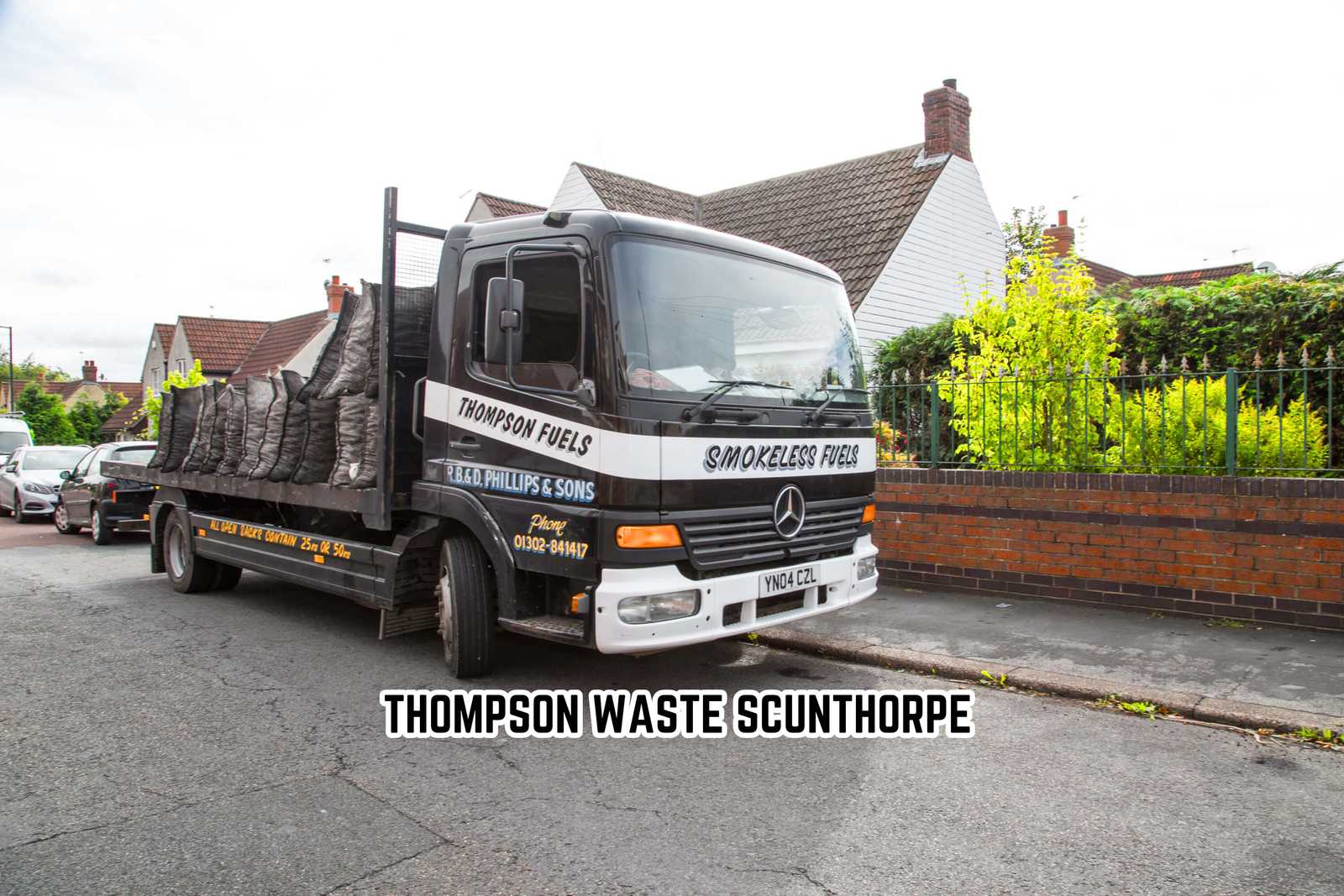
When most people think about waste and recycling services, names like national commercial firms or council contractors usually come to mind. However, in Scunthorpe — a town in North Lincolnshire, England with a rich industrial heritage — smaller companies have also played significant roles in managing local waste. One such name that has appeared in local business directories and regulatory reports is Thompson Waste.
In this article, we explore what Thompson Waste Scunthorpe actually was, its history, business operations, regulatory challenges, and broader context within the UK waste management sector. This detailed look is based on official records, news reports, and verified sources, giving readers a clear and factual perspective. (Find and Update Company Information)
What Is Thompson Waste Scunthorpe?
Thompson Waste Scunthorpe refers to a local waste management and recycling company that operated in the Scunthorpe area, primarily at the industrial estate on Winterton Road, Scunthorpe, DN15 0DH. The company was officially registered as a private limited company in the UK under the name Thompson Waste Recycling Ltd. (Find and Update Company Information)
The company was incorporated on 16 August 2016 and classified under the UK Standard Industrial Classification (SIC) as a business handling both collection and treatment of non‑hazardous waste. Its activities included collecting, sorting, and disposing of commercial and industrial waste, which likely included plastics, scrap metal, cardboard, and other recyclable materials.
Despite its legitimate registration, it is important to note that Thompson Waste Recycling Ltd was dissolved on 2 January 2018, ceasing operations after just over two years. (Find and Update Company Information)
History & Timeline of Thompson Waste Scunthorpe
Formation and Early Operation
The company began operations in 2016. Like many small UK limited companies, it was registered with a few directors and shareholders. Records indicate a director named Kevin T. held significant control over the company during its early period. (BizStats)
Thompson Waste Scunthorpe was intended to serve local businesses by providing essential waste management services, filling an important niche in a town heavily reliant on industrial operations.
Business Activities
During its operational years, the company focused on collecting waste from businesses and processing it for recycling or safe disposal. These activities were essential for maintaining compliance with environmental laws and supporting local industry.
Scunthorpe itself has a long industrial history, primarily tied to iron and steel production since the mid-19th century. Today, the town hosts a mix of heavy industries, warehouses, shops, and service businesses, all of which require consistent and safe waste collection services. (Wikipedia)
Dissolution
Although the company was incorporated in 2016, it was formally dissolved in January 2018. Once dissolved, it ceased to exist as a registered entity in the UK and had no ongoing obligations.
The exact reason for dissolution is not detailed in official records, but common causes include financial difficulties, failure to file required reports, or voluntary closure by company directors. Dissolution does not necessarily indicate wrongdoing but marks the end of business operations.
| Attribute | Details |
|---|---|
| Company Name | Thompson Waste Recycling Ltd |
| Location | Winterton Road, Scunthorpe, North Lincolnshire, England |
| Incorporated | 16 August 2016 |
| Dissolved | 2 January 2018 |
| Industry | Waste management & recycling (non-hazardous) |
| Director | Nessa Anne Thompson (faced legal action) |
| Services | Waste collection, recycling, disposal of non-hazardous waste |
| Notable Events | Legal prosecution for illegal waste storage and operating without permit |
| Status | Dissolved; no longer trading |
| Website/Social Media | No active online presence |
Regulatory Challenges and Environmental Issues
One of the most notable events associated with Thompson Waste Scunthorpe involved regulatory enforcement and legal action related to environmental compliance. Such issues are unfortunately not uncommon in the waste management sector.
Director Sentenced for Illegal Storage (2017)
In 2017, the director of Thompson Waste Recycling Ltd, Nessa Anne Thompson, was sentenced to six months in prison at Hull Crown Court. Additionally, she received a seven-year ban from serving as a company director. (letsrecycle.com)
The case arose from the illegal storage of waste at a Scunthorpe site on Winterton Road. Authorities found stockpiles of waste stored in a way that posed serious health, safety, and environmental risks. Moreover, the firm was operating without a valid environmental permit, a requirement for all UK waste carriers.
During a site inspection in 2014, a large fire broke out due to stored plastics and other materials. The fire required a coordinated response from local firefighting teams and prompted environmental monitoring to ensure nearby waterways and property were protected. (Resource Media)
The court ruled that the company’s practices reflected deliberate flouting of environmental regulations, leading to the director’s sentence. This case underscores the importance of legal compliance in the waste management industry.
Thompson Waste’s Role in Scunthorpe Waste Services
While Thompson Waste ceased operations in 2018, its history reflects a larger picture of waste management challenges and needs in Scunthorpe.
Industrial and Commercial Waste Demand
Scunthorpe’s industrial landscape generates complex waste streams. These include:
- Industrial waste from metal processing, factories, and workshops
- Commercial waste from retail stores, offices, and restaurants
- Recyclable materials such as cardboard, plastics, and glass
- Operational and hazardous waste requiring careful handling and proper disposal (Hull Waste)
Local authorities rely on licensed waste carriers to collect, recycle, and safely dispose of waste, reducing landfill use and protecting public health. (WasteManaged)
Current Waste Services Landscape
Today, most waste management in Scunthorpe is handled by established UK firms with proper environmental permits. These businesses ensure strict compliance, accurate reporting, and safe operations, which contrasts with the issues Thompson Waste faced in its short existence.
Lessons from Thompson Waste’s Experience
The story of Thompson Waste Scunthorpe provides key lessons for the waste management industry:
1. Compliance Matters
Waste firms must maintain proper permits, accurate records, and adhere to environmental safety standards. Failure to do so can lead to fines, legal action, and imprisonment — as this case demonstrates.
2. Environmental & Community Responsibility
Large waste sites, especially those storing plastics and flammable materials, can pose fire and pollution risks. Local residents and emergency services can be significantly affected if operations are not properly managed.
3. Short-Lived Companies Are Common
Small waste companies may emerge and dissolve within a few years. Dissolution can leave temporary gaps in service unless other reliable carriers fill the need.
Addressing Misconceptions
Not a National Brand
Thompson Waste Scunthorpe Recycling Ltd was a local limited company and not part of a national waste management network like Biffa, Veolia, or Suez. Its services were restricted to the local industrial and commercial sector in Scunthorpe.
Dissolution ≠ Criminality
Although the director faced prosecution for illegal storage, the company’s dissolution itself is not evidence of criminality. Many dissolved companies close simply due to operational or financial reasons.
Variety in Waste Companies
The experience of Thompson Waste is not representative of all waste firms. Many licensed waste carriers in Scunthorpe operate legally, safely, and efficiently, providing essential services to local businesses.
Legacy of Thompson Waste Scunthorpe
Today, Thompson Waste Scunthorpe lives on in historical records and industry reporting. Its story emphasizes the importance of responsible waste handling, regulatory compliance, and public safety.
The company’s brief history serves as a cautionary tale in the UK waste management sector: cutting corners can have serious consequences. It also highlights the critical role of small and medium waste firms in supporting local communities, especially in industrial towns like Scunthorpe.
Conclusion
Thompson Waste Scunthorpe was a small UK waste management company that operated briefly from 2016 to 2018. Its history reflects both the opportunities and challenges of local waste services. While its existence was short, the regulatory actions taken against the company underscore the importance of legal compliance, environmental responsibility, and safety standards.
Today, Thompson Waste Scunthorpe continues to rely on licensed and reputable waste management firms to handle industrial and commercial waste safely, illustrating the ongoing need for professional services in this vital sector.
By examining Thompson Waste Scunthorpe story, businesses and residents can better understand the importance of choosing responsible waste carriers and maintaining environmental compliance in everyday operations.
FAQs
Q: What was Thompson Waste Scunthorpe?
A: Thompson Waste Scunthorpe was a small local waste management and recycling company based in Scunthorpe, North Lincolnshire, operating mainly in industrial and commercial waste collection.
Q: When did Thompson Waste operate?
A: The company was incorporated in August 2016 and dissolved in January 2018, operating for just over two years.
Q: Why was Thompson Waste in the news?
A: The company’s director faced legal action due to illegal waste storage and operating without a proper environmental permit, highlighting regulatory compliance issues.
Q: Is Thompson Waste still active today?
A: No, the company was dissolved in 2018, and it no longer trades or operates in Scunthorpe.
Q: What lessons can businesses learn from Thompson Waste?
A: Businesses can learn the importance of environmental compliance, proper waste handling, and legal permits to avoid fines or legal consequences.
